


Concrete vs. Interlocking Pavers: The Coastal Backyard Showdown
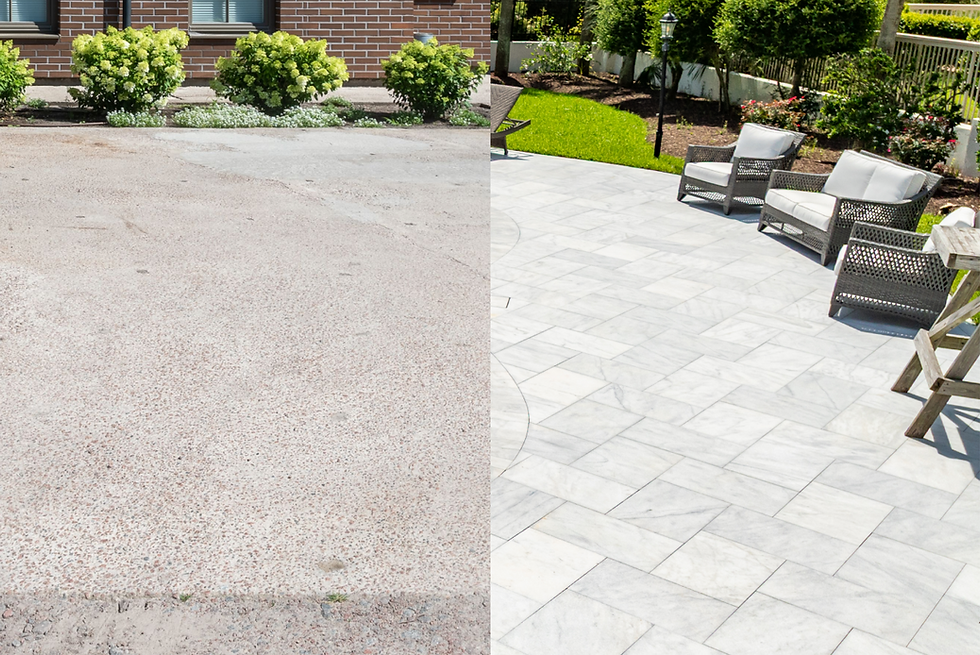
When it's time to build a new backyard patio or driveway in Conway, Myrtle Beach, or Pawleys Island, you face a fundamental choice: pour a standard concrete slab, or install a custom interlocking paver system?
A basic concrete pad may look budget-friendly upfront, but our coastal conditions make interlocking pavers the superior long-term investment for Grand Strand properties. Here's how they stack up across the features that matter most.
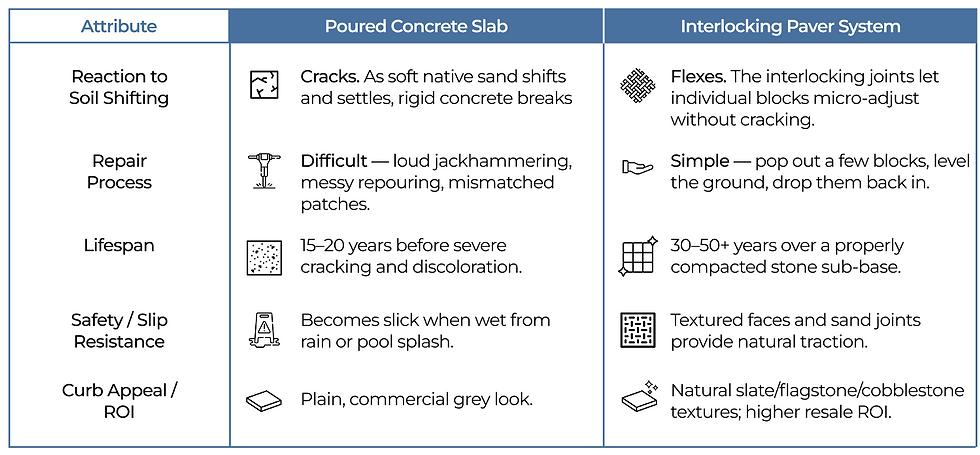
The Shifting-Soil Reality
In coastal zones like Garden City and North Myrtle Beach, the ground isn't stationary. Heavy rainfall, high water tables, and sandy sub-soils cause constant minor earth movement. Because poured concrete can't bend, it must break. Interlocking paver systems are inherently flexible — they distribute weight across thousands of independent joints, so your patio moves with the earth instead of cracking against it.
Curb Appeal and Equity Return
Let's be honest: grey concrete looks commercial and plain. Interlocking pavers come in gorgeous textures that mimic natural slate, flagstone, and cobblestone. Real-estate data consistently shows custom paver hardscaping yields a significantly higher ROI and curb appeal when selling a home in Horry or Georgetown County.
Make the smart choice for your home. Get a free, transparent estimate from Grand Strand Hardscapes serving homeowners from Calabash down to Murrells Inlet.


Comments